Video Explainers
Product reviews, founder interviews and tech deep-dives
 9:34
Brain-AI Interface in a Cap: What Sabi’s $50M Seed Round Has to Prove | Product-X
Brain-AI interface in a cap: can a non-invasive brain-computer interface pass your intentions to AI reliably enough for everyday use? On October 9, 2026, Sabi announced a $50 million seed round led by Khosla Ventures, with participation from Accel, Initialized Capital, DST Global, and others. The startup is developing a cap-shaped, non-invasive brain–AI interface intended to translate deliberately expressed intentions into computer inputs. Rena, Vivian, and Nolan examine what the funding should validate, how EEG hardware and a brain-signal model would work together, why a laboratory prototype’s reported performance cannot be applied directly to an everyday cap, and how calibration, unintended activations, and correction time shape the business case. Business models and interface recommendations discussed here are our analysis. The product remains in development. Chapters 00:00 Why Put $50 Million Behind a Cap? 01:16 Capital and Team: What Evidence Should the Money Produce? 03:19 The Technology: From Brain Signals to a Command 06:20 The Business: How Convenient Must It Be Before People Wear It? 08:32 What Should We Look for in the Next Demonstration?
 6:51
This AI Infrastructure Startup Predicts GPU Needs Before Code Runs | Product-X
What does an AI infrastructure startup do while everyone else is buying more GPUs? To avoid out-of-memory crashes, AI teams routinely ask for three to five times the GPU and VRAM a job needs, and more than half of that capacity often sits idle. In this episode, Product-X breaks down Expanse, a San Francisco and London startup that predicts a job's GPU compute, VRAM, and CPU memory milliseconds before it runs. Expanse announced a $5.3 million Seed round. The round was led by Crane Venture Partners, with Y Combinator (P26), PXN Ventures, Standard Capital, Scribble Ventures, and angels including former DeepMind researchers. The four co-founders, Ismaeel Bashir (CEO), Nikodem Bieniek (CTO), Eren Mendi (CPO), and Yafet Melake (COO), come from HPC at the University of Edinburgh. Hosted by Rena, with Vivian Liu (angel investor, PreAngel Fund) on the investment case and Nolan (former Big Tech CTO) on the engineering. What you'll learn: why post-hoc monitoring tools like Datadog can't stop GPU waste; how Expanse reads code before it runs and balances hardware cost against crash risk; how it found nearly $8 million of idle compute in one production deployment test; and why dynamic agent workflows are the hardest problem left. Product-X decodes AI agents, AI infrastructure companies, and frontier startups for builders and investors. Subscribe for evidence-based breakdowns of what a company built, why it matters, and whether it's worth watching. #AIInfrastructure #GPUUtilization #Expanse Chapters 00:00 What an AI infrastructure startup does about idle GPUs 01:43 The investment case: the Edinburgh HPC team and the $5.3M Seed 03:16 How it works: reading code before it runs, cost vs crash risk, hardware routing 05:13 Where it goes next: utilization and dynamic agent workflows 06:09 Wrap-up: how much of your GPU capacity gets used
 8:02
What Does It Take to Build a Fault-Tolerant Quantum Computer? Oratomic Explained | Product-X
What will it take to build a fault-tolerant quantum computer? Superconducting chips need huge dilution refrigerators, and ion traps struggle to fit more than a few thousand qubits in one chamber. Without tens of thousands of high-fidelity physical qubits, real error correction stays out of reach. In this episode, Product-X breaks down Oratomic, a neutral-atom quantum computing company that announced a $475 million Series B. Its post-money valuation is above $5.4 billion, and total funding comes to $775 million. The round was co-led by ARCH Venture Partners, Spark Capital, Khosla Ventures, Index Ventures, General Catalyst, and Bezos Expeditions. The founding team comes from neutral-atom and laser-cooling labs at Harvard, MIT, and JILA/NIST. Hosted by Rena, with Vivian Liu (angel investor, PreAngel Fund) on the investment case and Nolan (former Big Tech CTO) on the physics. What you'll learn: How optical tweezers trap and rearrange thousands of neutral atoms in a vacuum chamber, with no dilution refrigerator; How the Rydberg blockade lets two atoms run a two-qubit gate with fidelity above 99.9%; Physical vs logical qubits: why qLDPC codes need about 50 to 100 physical qubits per logical qubit instead of roughly 1,000. Product-X decodes AI agents, AI infrastructure companies, and frontier startups for builders and investors. Subscribe for evidence-based breakdowns of what a company built, why it matters, and whether it's worth watching. #FaultTolerantQuantumComputing #NeutralAtoms #Oratomic Chapters 00:00 What it takes to build a fault-tolerant quantum computer 02:20 The investment case: the team and the $475M Series B 03:58 How it works: optical tweezers, the Rydberg blockade, and logical qubits 06:21 Where it goes next: positioning and the hardest engineering problems 07:16 Which problems a fault-tolerant machine could take on
 7:40
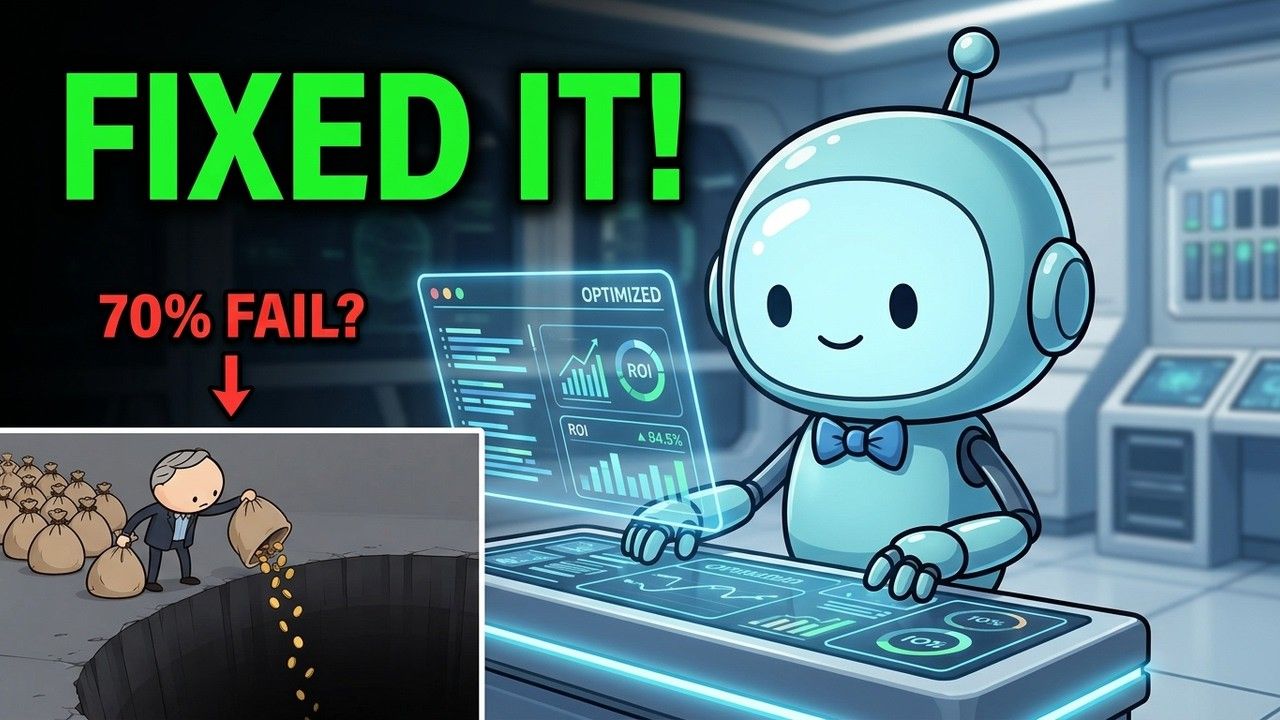
Why Do 70% of Digital Transformation Projects Fail? Trmeric's AI Agent Answer | Product-X
Why do so many digital transformation projects fail? McKinsey and Gartner surveys say nearly 70% go over budget, run badly late, or fail outright. The usual cause is a gap: executive strategy lives in slide decks and spreadsheets, while engineering and IT teams work in Jira, GitHub, and SAP. In this episode, Product-X breaks down Trmeric, a San Ramon, California startup that raised a $6.5 million Seed round to close that gap with AI agents. Its agent, Tango, works as an AI chief of staff: it breaks down strategy, matches people to work, watches for risk, and checks ROI. The platform has already supported more than $1 billion in enterprise transformation projects. What you'll learn: why transformation projects break between strategy and execution; how Tango hands work to planning, resource, and governance agents; how its initiative priority score weighs alignment and ROI against CapEx and risk, which is AI project portfolio management in practice; what the shift from System of Record to System of Agency means for investors; and the hardest engineering problem ahead, legacy systems and zero-trust integration. Company snapshot: Trmeric (San Ramon, California). Seed round of $6.5 million led by Hitachi Ventures, with Schema Ventures, CerraCap Impact VC, FalconX Ventures, and Executive Venture Fund; angels include Gokul Rajaram (former Google and DoorDash executive), Yatish Mishra, and Shailesh Lakhani. Founders: CEO Siddharth Bohra and Debottam Datta, 20 years in Fortune 500 IT transformation. Hosted by Rena, with Vivian Liu (angel investor, PreAngel Fund) on the investment case and Nolan (former Big Tech CTO) on the architecture. Product-X decodes AI agents, AI infrastructure companies, and frontier startups for builders and investors. Subscribe for evidence-based breakdowns of what a company built, why it matters, and whether it's worth watching. Chapters 00:00 Why digital transformation projects fail 02:19 The investment case: Hitachi, Gokul Rajaram, and the System of Agency 03:44 How it works: Tango and the initiative priority score 05:50 What comes next: legacy systems and zero-trust integration 07:00 The question to ask about your own projects #DigitalTransformation #AIAgents #Trmeric
 14:47
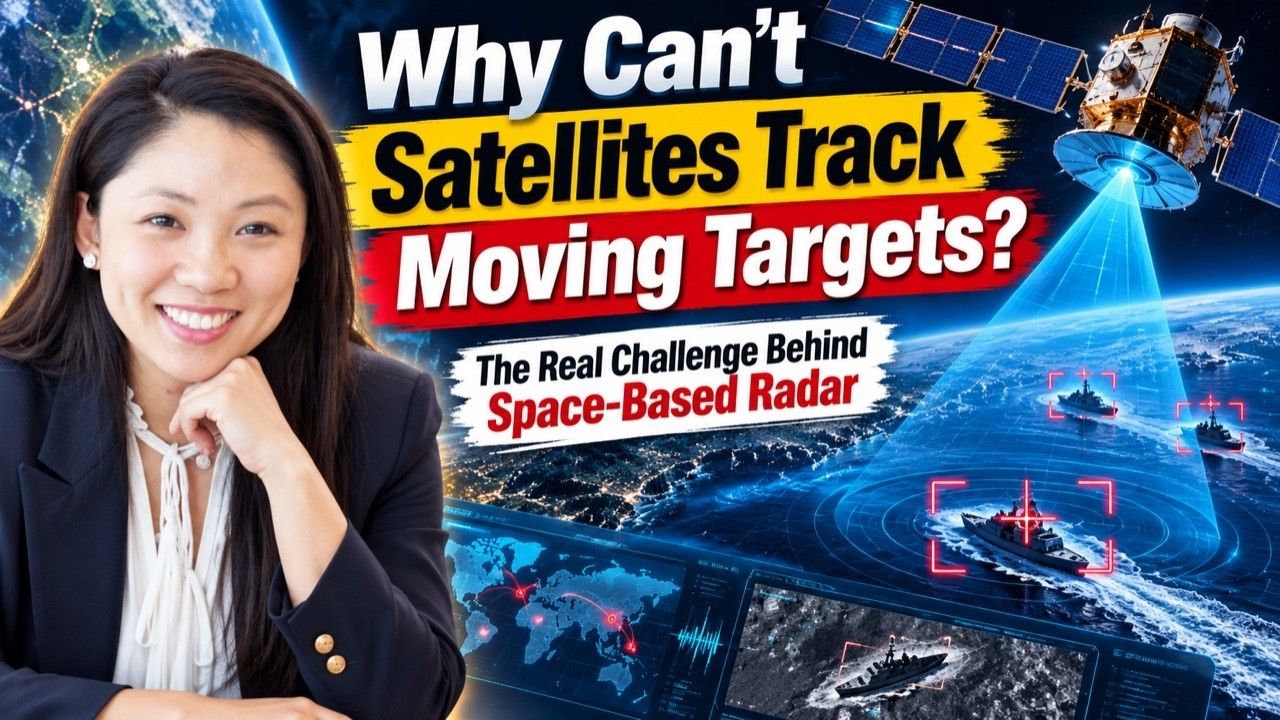
Why Can't Satellites Track Moving Targets? Space-Based Radar and Kapta Space's $24M Bet
Space-based radar can produce a sharp still image, yet holding track on a ship underway or a missile in mid-course is another problem entirely. Holding track is a coverage problem, and coverage is a function of how many satellites you can afford. In this episode, Product-X breaks down how Kapta Space uses a new electronic beam-steering architecture to cut radar payload power, volume, and cost — and why founders, investors, and technical operators should care. What you'll learn • Why tracking moving targets from orbit fails arithmetically when you can only afford three or five satellites • The budget migration from retiring airborne surveillance platforms to low-earth-orbit constellations • Four sets of numbers to check: contract type, payload cost curve, value-chain position, commercial reality • Why low power is never free in RF, and where the cost gets paid • Doppler shift, clutter smeared by the satellite's own velocity, space-time adaptive processing, and blind speeds • Where the moat really sits: flight heritage, clearance, and constellation position — not the algorithm • Four verifiable tests for whether it works Company snapshot • Company: Kapta Space (California and Seattle) • Category: Space-based radar / moving target indication payloads • Funding: $24M Series A, $30M total; co-led by Washington Harbour Partners and Bison Ventures, with MetaVC Partners, MYDA Advisors, Entrada Ventures, Aurelia Foundry, and Fitz Gate Ventures • Status: classified U.S. military contract; two on-orbit demonstrations within 24 to 36 months • Key question: is it selling a payload module or a complete capability? Product-X decodes AI agents, AI infrastructure companies, and frontier startups for builders and investors. Subscribe for evidence-based breakdowns of the technology, capital, talent, risks, and opportunities shaping the next industry shift. #SpaceBasedRadar #KaptaSpace #DefenseTech Chapters 00:00 Why satellites struggle to track moving targets 02:35 The investment case: entering a budget migration 05:30 The mechanism: Doppler, clutter, and blind speeds 10:28 The moat: flight heritage and position, not the algorithm 13:39 Four verifiable tests
 11:48
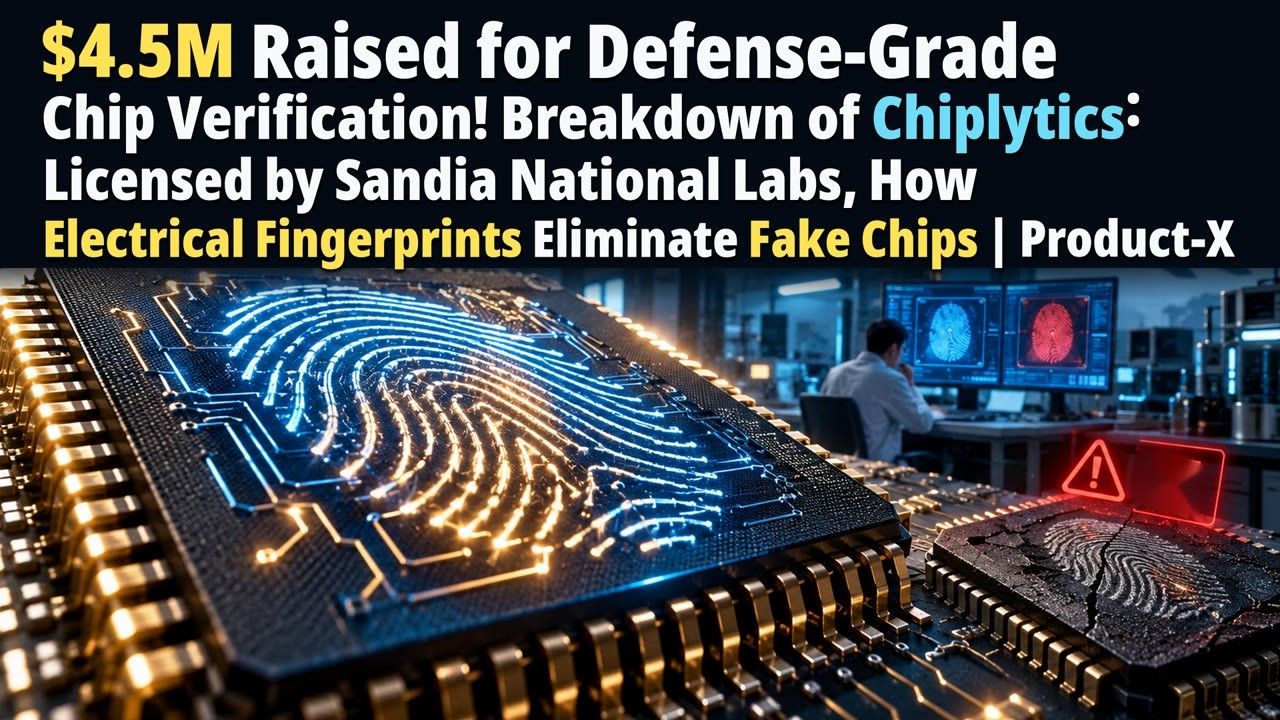
$4.5M to Catch Fake Chips Without Destroying Them | Chiplytics, Sandia & TACFI | Product-X
Exploring unknown tech, decoding future unicorns. Welcome to Product-X. Before a chip goes into a fighter radar, a satellite power module or an automotive controller, how do you know it wasn't pulled from an old circuit board, sanded down and re-marked as new? The checks that give direct evidence open the package or stress the part, so the chip can't be shipped afterwards. Buyers end up testing a sample and living with whatever stays in the untested pile. Chiplytics wants to measure a chip and leave it usable. The company announced $4.5 million in new funding, co-led by Scout Ventures and Waypoint Ventures, with QKSS, Industrious Ventures, Interwoven Ventures, the Seattle Alliance of Angels and Cornell's Red Bear Angels participating; the financing also includes a U.S. Air Force Tactical Funding Increase (TACFI) award. Its electrical testing technology comes from Sandia National Laboratories. Chiplytics was co-founded by CEO Steven Dourmashkin and President Stephen DiBartolomeo. In this episode: • Vivian Liu (veteran angel investor) on what the $4.5M is buying: demand created by procurement rules, the Sandia license, the TACFI award, and the revenue questions that decide whether this is a business: per-part testing vs software vs licensing the fingerprint library, cost and time per chip, lab capacity, and who pays. • Nolan (ex-Big Tech CTO) on how a non-destructive test can work: probe-station measurements of capacitance, inductance, junction I-V behavior and high-frequency scattering, optical inspection for sanding and re-marking, golden samples, and scoring how far a part sits from normal. Plus where it fails: shifting baselines across lots, anomalies without a cause, threshold trade-offs, and tampering that leaves no electrical trace. • Where a moat could come from when the statistics are public: the reference library, accreditation and acceptance by procurement teams, and a record of resolved cases. • Four things to watch: independent blind-test recall, false alarms across lots, the cost of adding new part types, and the revenue mix. The "above 99% accuracy" figure in company materials is a company claim; we did not find it in the funding release or on chiplytics.com. ⏱️ Chapters 00:00 When verifying a chip destroys it, all you can do is sample 01:48 The investment case: demand created by regulation 04:10 The technical mechanism: from how a chip looks to how it behaves electrically 07:59 Commercial defensibility: the method is public; the library, credentials and loop are not 10:41 Conclusion: four verifiable tests Sources Funding announcement (Business Wire, Oct 6, 2026); Dealroom company profile; chiplytics.com; U.S. Senate Armed Services Committee report on counterfeit electronic parts (2012). #Chiplytics #CounterfeitChips #HardwareSecurity #DefenseTech #ProductX
 14:25
Is Heart Disease Genetic? Polygenic Risk Scores Explained | Arboretum | Product-X
Is heart disease genetic? Partly, but no single gene decides it. Common diseases like coronary artery disease, type 2 diabetes, metabolic liver disease and Alzheimer's come from thousands of small genetic variants mixed with lifestyle, age and environment. A polygenic risk score (PRS) adds those variants up into one number. The hard part isn't computing the score; it's what a physician does differently once they have it. This episode breaks down Arboretum LifeSciences (Cambridge, Massachusetts), which launched with a $30M Series A from F-Prime, GV, .406 Ventures, Hims & Hers and Amgen. CEO Anthony Philippakis was chief data officer at the Broad Institute; President Clare Bernard led the Broad's Data Sciences Platform. We cover: • The investment case: a position where consumers (telehealth), pharma (trial stratification) and health systems (longitudinal data) meet, and why that intersection is also the biggest risk • The mechanism: a PRS is a relative position in the population, not a verdict; how a static score is put on a timeline • Four failure modes: ancestry generalization, correlation vs. causation, confounding in observational data, record-extraction noise • Defensibility: the algorithm is public; the data asset, distribution position and pharma validation loop are not • Four verifiable tests: physician management change, incremental predictive value, non-European-ancestry validation, payer coverage Exploring unknown tech, decoding future unicorns. Welcome to Product-X. ⏱️ Chapters 00:00 Is heart disease hereditary? 01:26 Arboretum LifeSciences and its $30M Series A 02:16 Part 1 · The investment case 05:32 Part 2 · The mechanism: from mutation to position 09:48 Part 3 · Defensibility: what becomes a real barrier 13:05 Conclusion · Four verifiable tests Source: https://www.arboretum.bio/news/arboretum-launch This video is for informational purposes only and is not medical or investment advice.
 7:52
Mecka's $60M Series B: Turning Human Actions into Robot Experience | Product-X
Mecka announced a $60 million Series B on October 7, 2026, led by Sequoia with NVIDIA, M12, Qualcomm Ventures, Samsung, and others participating. Starting with picking up a cup, we examine capture, 3D reconstruction, quality control, human-to-robot transfer, and deployment economics. Hardware and dataset size are inputs; trained task performance is the outcome to verify. Chapters 00:00 How a robot learns to pick up a cup 00:56 Data company or robot company? 01:57 Turning recordings into training data 03:06 A human move isn't a robot command 04:16 Is the dataset worth buying? Sources [S1] Mecka raises $60M Series B: https://www.mecka.ai/news/series-b [S2] Mecka website: https://www.mecka.ai/ [S3] EgoVerse paper (v2): https://arxiv.org/abs/2604.07607v2 [S4] EgoVerse project: https://egoverse.ai/ The cup and warehouse scenes are hypothetical examples used to explain the mechanism. Investment views are the hosts' own and do not reflect private conversations with the company or its investors. #ProductX #MeckaAI #PhysicalAI #RobotLearning #EmbodiedAI
 16:15
Sequoia Passed, Then Led: How DoorDash Changed Alfred Lin's Judgment | Product-X
Exploring unknown technologies. Decoding tomorrow's unicorns. Our opening episode connects Sequoia's history with Alfred Lin's operating career to examine how investors revise judgments. DoorDash raises questions about retention, density, and unit economics. Airbnb distinguishes early investment from later support. Harvey and FTX show why technical opportunity, business value, and governance need separate evidence. Rena hosts; Vivian examines capital; Nolan explains systems and validation. We also trace the firm's origins, from Don Valentine's 1972 founding to the 2023 independent partnerships, and connect that history to the investment questions in this episode. Chapters 00:00 Opening: Sequoia Passed on DoorDash 01:15 Institutional History: From Early Silicon Valley to Today 02:28 Part One: How Experience Shapes Investment Judgment 04:24 The Operating Perspective: Where Customer Experience Lives 05:22 Part Two: DoorDash—What Evidence Changes an Investor's Mind? 08:08 DoorDash, One Level Deeper: Retention Isn't Profit 09:29 Part Three: Airbnb and Harvey—Getting the Credit Right 11:21 After the Investment: What Board Support Changes 12:14 Part Four: Today's Priorities—and Where Judgment Can Fail 14:06 Revising Judgment Without Abandoning Discipline 15:17 Closing: Four Answers for Your Next Round Sources S1 Airbnb Investor Relations — Alfred Lin: https://investors.airbnb.com/governance/default.aspx S2 Sequoia — Alfred Lin: https://sequoiacap.com/people/alfred-lin S3 Crucible Moments — DoorDash: https://sequoiacap.com/podcast/crucible-moments-doordash S4 The DoorDash Partnership: https://articles.sequoiacap.com/doordash-story S5 Airbnb IPO — Embracing the Adventure: https://sequoiacap.com/article/airbnb-ipo-embracing-the-adventure S6 Sequoia — Pat Grady: https://sequoiacap.com/people/pat-grady S7 Partnering with Harvey: https://sequoiacap.com/article/partnering-with-harvey-putting-llms-to-work S8 2026: This Is AGI: https://sequoiacap.com/article/2026-this-is-agi S9 Launching Peak XV Partners: https://www.peakxv.com/announcement/launching-peak-xv-partners S10 Sequoia — FTX: https://sequoiacap.com/companies/ftx S11 Sequoia — Our History: https://sequoiacap.com/our-history S12 Crucible Moments essay: https://sequoiacap.com/article/crucible-moments-essay #ProductX #Sequoia #VentureCapital
 9:01
An $870M Series A: TypeSafe AI Wants to Put AI Decisions Inside Software | Product-X
TypeSafe AI has disclosed an $870 million Series A led by a16z, with Sequoia Capital, DCVC, and angel investors participating, at an announced $7.5 billion valuation. Rena, Vivian Liu, and Nolan explore Jev's machine-native approach: structured decisions inside software, the difference between probabilities and confidence, the limits of a "zero hallucinations" claim, and the full cost of enterprise automation. Performance claims are company-reported. Business analysis and the support scenario are our own. Chapters 00:00 Why is a decision worth $870 million? 01:07 The position investors are backing 02:10 Connecting ambiguous judgments to code 03:51 Making uncertainty useful 05:31 What does "zero hallucinations" mean? 06:46 Beyond the speed claims Sources Series A announcement: https://typesafe.ai/blog/series-ai Introduction (Choice / Score / Noul): https://docs.typesafe.ai/introduction Introducing System One Models & Jev: https://typesafe.ai/blog/introducing-system-one-models-and-jev AI primer (calibration): https://docs.typesafe.ai/introduction/machine-learning-primer Confidence: https://docs.typesafe.ai/confidence Patterns: https://docs.typesafe.ai/patterns #ProductX #TypeSafeAI #Jev
 14:51
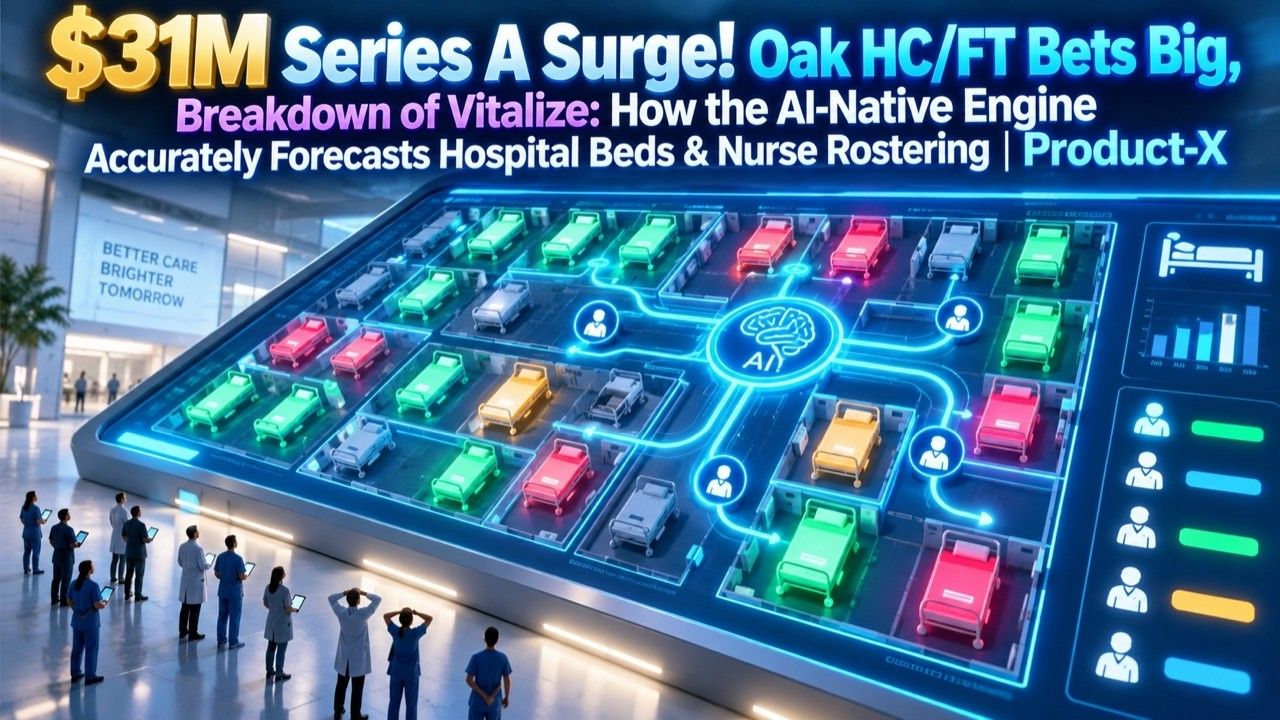
$31M Series A! Oak HC/FT Bets on Vitalize: AI Forecasting Hospital Beds & Nurse Rosters | Product-X
Exploring unknown technology, decoding future unicorns. Welcome to Product-X. U.S. hospitals run on an average operating margin of one to two percent, and labor is 50–60% of hospital operating expense. Staffing is a commitment made before demand is known — so when the forecast is wrong, hospitals buy certainty the most expensive way there is: agency nurses at a multiple of standard wages. San Francisco-based Vitalize has raised a $31M Series A led by Oak HC/FT, with Norwest Ventures, .406 Ventures, Constellation Ventures, Y Combinator, and the MemorialCare Innovation Fund — a health system fund that is also a Vitalize customer. The platform integrates with a hospital's EMR, timekeeping and payroll systems, forecasts patient volume and bed release by unit over the coming days, and builds schedules that respect nurse-to-patient ratios and union rules. Vitalize describes itself as "a system of action, not a system of record." In this episode, Vivian Liu (veteran angel investor) asks what the $31M is buying: a substitution path that maps straight onto one budget line — premium labor spend (the company reports customers cutting it by more than 40%) — and why attribution is the number to pin down. Nolan (ex-Big Tech CTO) explains why the hard part isn't forecasting but attaching a forecast to a decision made of constraints: discharge timing the record can't see, staircase-shaped error, infeasible schedules, feedback loops, and unwritten union practice. Then: why the model isn't the moat — integration depth, a compliance-configuration library, and reference customers are — and four tests anyone can use to judge whether it works. ⏱️ Timestamps: 00:00 Hospitals make their most expensive decision when they know the least 02:11 What $31M is buying: a substitution path onto one budget line 05:21 From forecast to decision: constraints, infeasibility and fallbacks 10:05 No moat in the model: integration, compliance configs, references 13:35 Four verifiable tests Company claims are as stated in Vitalize's own materials (vitalize.care). #Vitalize #HealthcareAI #ProductX
 10:31
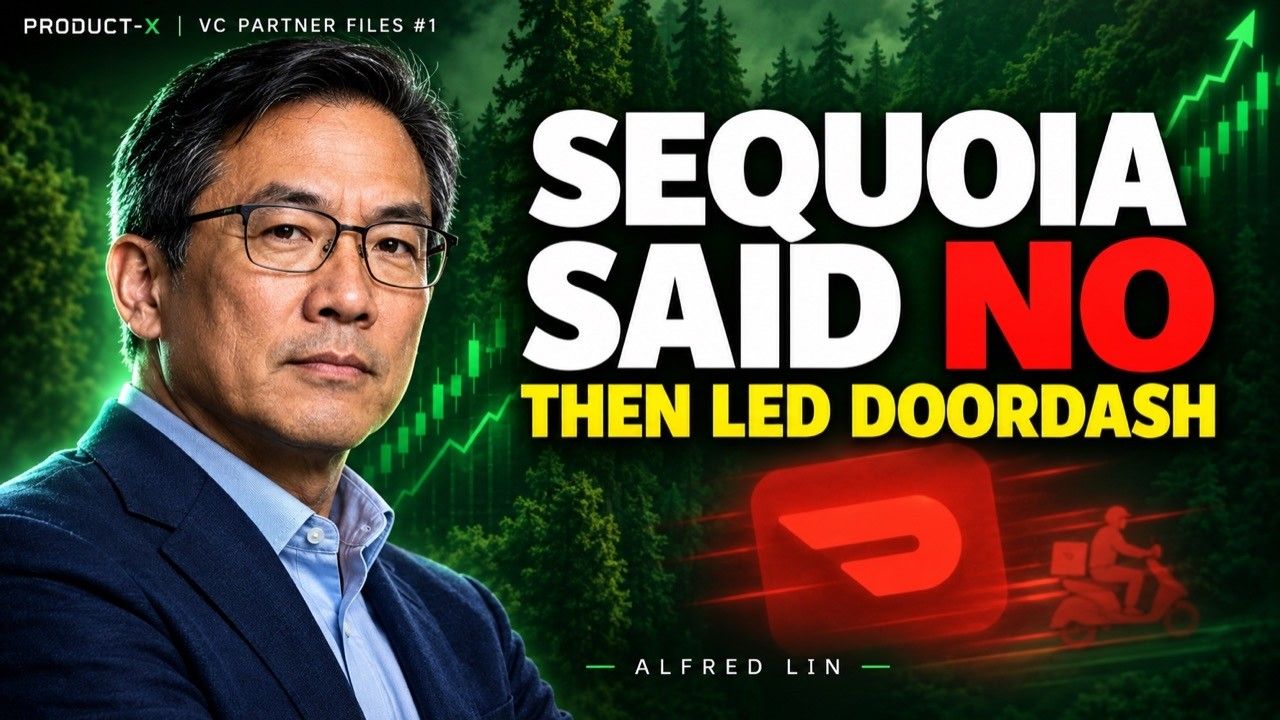
Sequoia Passed on DoorDash—Then Led Its Round: How Alfred Lin Evaluates Startups | Product-X
Exploring unknown technologies. Decoding tomorrow's unicorns. Welcome to Product-X. In this new series, we turn the camera toward the venture firms and partners behind ambitious startups. Our first episode focuses on Sequoia Capital's Alfred Lin. How have his mathematics and statistics background—and his operating experience at LinkExchange and Zappos—shaped the way he evaluates founders, customer retention, and scale? Through Sequoia's initial rejection of DoorDash and subsequent investment, the timeline of its Airbnb partnership, and its investment in legal AI company Harvey, we explore how a partner's experience translates into investment judgment. Vivian examines capital and business strategy; Nolan explains operating metrics and technical validation. Analysis based on public examples should not be mistaken for a complete account of Sequoia's internal investment criteria. Chapters: 00:00 Sequoia passed on DoorDash. What changed? 01:14 How experience shapes investment judgment 03:08 DoorDash: what evidence changes an investor's mind? 05:53 Airbnb and Harvey: getting the credit right 07:41 Today's AI priorities—and where judgment can fail 09:37 Four answers to prepare before your next round Sources: Alfred Lin governance bio (Airbnb IR): https://investors.airbnb.com/governance/default.aspx Alfred Lin (Sequoia): https://sequoiacap.com/people/alfred-lin Crucible Moments: DoorDash: https://sequoiacap.com/podcast/crucible-moments-doordash The DoorDash partnership: https://articles.sequoiacap.com/doordash-story Airbnb IPO: https://sequoiacap.com/article/airbnb-ipo-embracing-the-adventure Pat Grady (Sequoia): https://sequoiacap.com/people/pat-grady Partnering with Harvey: https://sequoiacap.com/article/partnering-with-harvey-putting-llms-to-work 2026: This is AGI: https://sequoiacap.com/article/2026-this-is-agi Launching Peak XV Partners: https://www.peakxv.com/announcement/launching-peak-xv-partners FTX (Sequoia): https://sequoiacap.com/companies/ftx